

North Dakota · Unitedstates Authority
North Dakota State Authority
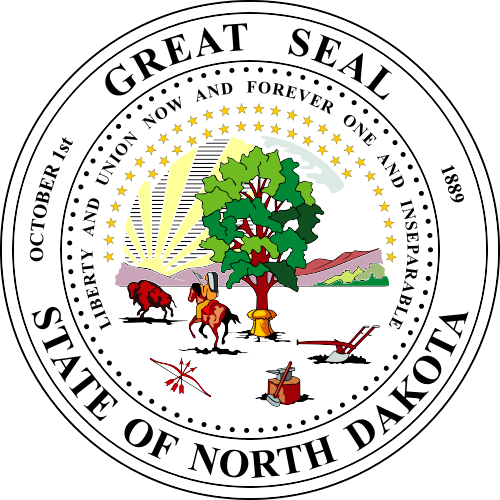
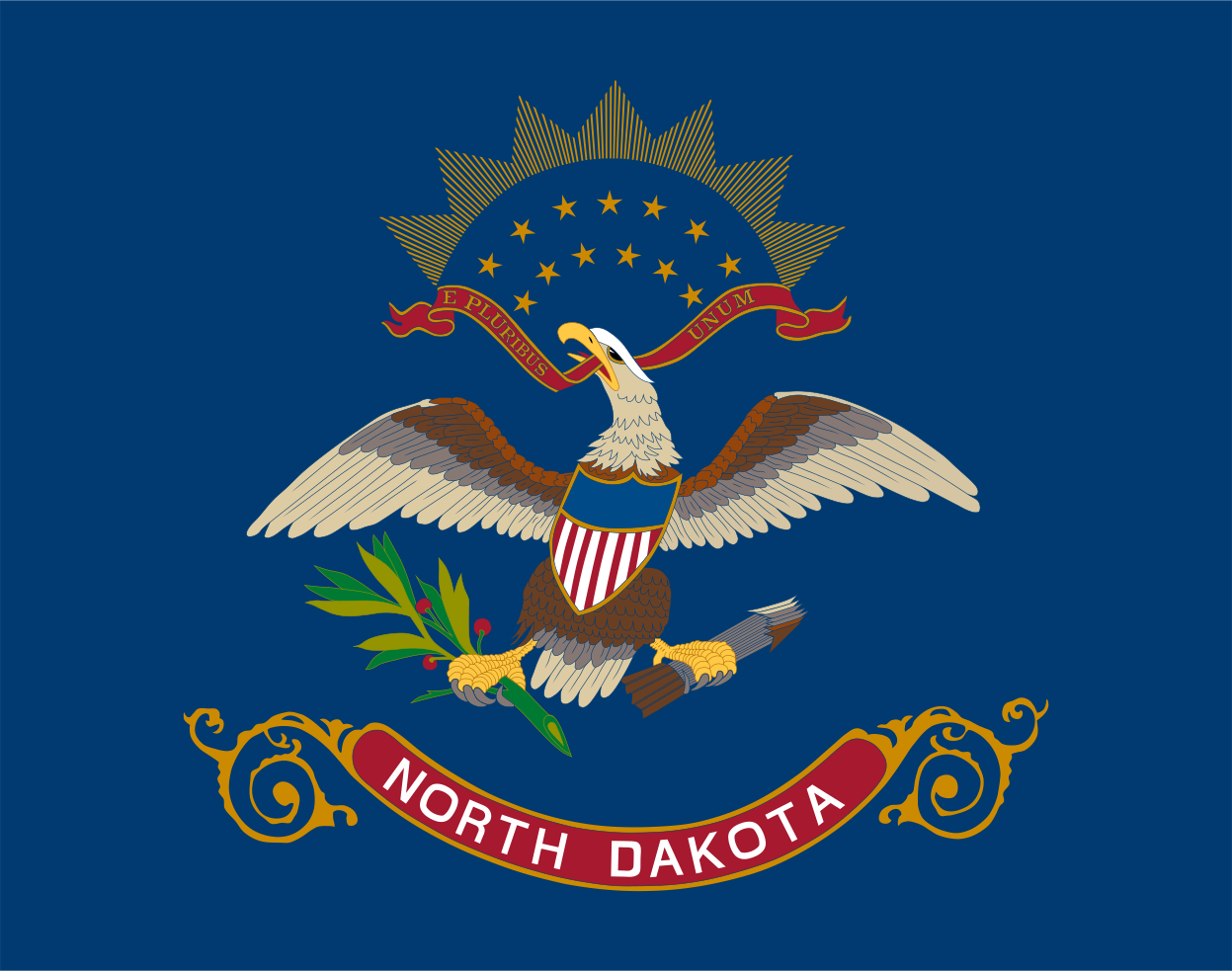
North Dakota State Authority is home to 784,841 residents with median household income $76,657.
Explore North Dakota State Authority by County
Click any county to visit its landing page.
North Dakota State: What It Is and Why It Matters
North Dakota is the 39th state admitted to the Union, entering on November 2, 1889 — the same day as South Dakota, in a deliberate act of Congressional simultaneity that left both states arguing, mildly, about which one came first. This page covers how the state is structured, what its government systems do, how its 53 counties fit into the whole, and where public understanding tends to go sideways. Across 90 published pages — from county-level government profiles to agency breakdowns and city guides — this site maps the operational reality of North Dakota's public institutions.
Why This Matters Operationally
North Dakota operates under a bicameral legislature that meets biennially — every two years, in odd-numbered years — which means the state's entire legislative agenda, budget, and statutory changes get compressed into a single session. The North Dakota Legislative Assembly convenes for no more than 80 days per session, a constitutional ceiling that creates real urgency around how rules get made and money gets allocated. Miss the session window, and a proposed change waits two years.
That structure has downstream consequences. State agencies operate on two-year appropriations cycles, not annual ones. Counties, which are the primary delivery mechanism for most public services — from property records to road maintenance — plan around that rhythm. A resident disputing a property assessment in Bottineau County or filing a business registration in Benson County is interacting with systems whose funding authority traces back to a 80-day legislative window that may have closed 18 months prior.
The North Dakota Governor's Office holds broad executive authority during inter-session periods, including emergency rulemaking powers that have practical effects on agriculture, energy, and public health — three sectors that define much of the state's economic base. Agriculture alone accounted for roughly $6.5 billion in annual cash receipts as of the most recent USDA census figures (USDA National Agricultural Statistics Service, 2022 Census of Agriculture).
What the System Includes
North Dakota's governmental architecture has three main layers, and they don't always communicate as cleanly as an org chart suggests.
State government sits at the top: the Legislative Assembly, the Governor, the Supreme Court, and a constellation of elected statewide offices — Attorney General, Secretary of State, State Treasurer, and others — each operating with independent constitutional authority. The North Dakota Constitution establishes these roles explicitly, which means the Governor cannot simply absorb or redirect the functions of, say, the North Dakota Attorney General by executive preference.
County government forms the operational middle layer. North Dakota's 53 counties are not merely administrative subdivisions — they are constitutionally recognized units of local government with elected commissioners, auditors, and sheriffs. The North Dakota Counties: Complete Government Structure Guide maps this structure across all 53 counties, including how each county commission operates and what services fall under county versus state jurisdiction.
Municipal government handles incorporated cities and towns. Fargo, with roughly 130,000 residents as of the 2020 U.S. Census (U.S. Census Bureau, 2020 Decennial Census), is the largest city. Bismarck, the capital, runs a city-commission form of government. These cities operate under home-rule charters or statutory authority granted by the state — not as sovereign entities, but as creatures of state law.
The North Dakota Government Authority provides deeper reference material on how these governmental layers interact, covering agency structures, regulatory bodies, and the mechanics of state administration that don't always surface in standard civic guides.
Core Moving Parts
Understanding North Dakota's government means tracking five structural features that shape almost everything else:
-
Biennial legislature — The 80-session-day cap concentrates lawmaking into a single burst every two years. Bills not passed die; agencies wait; counties plan accordingly.
-
Elected judiciary — North Dakota elects its Supreme Court justices and district court judges through nonpartisan elections. The North Dakota Supreme Court is the court of final appeal for all state matters, including administrative agency decisions.
-
County as service delivery — Most front-line public services — driver's licenses, property records, welfare administration, road maintenance — run through county offices, not state agencies directly. Adams County in the southwest corner of the state and Barnes County in the southeast both illustrate how dramatically different county-level capacity can look across North Dakota's geography: Adams County covers 988 square miles with a population under 2,500, while Barnes County hosts Valley City and a more diversified local economy.
-
Oil and gas revenue structure — The Bakken formation drives significant state revenue through production taxes. The North Dakota Department of Transportation has historically received significant appropriations tied to oil activity, given the infrastructure demands of heavy haul trucking in the western counties.
-
Tribal sovereignty as a parallel jurisdiction — Five federally recognized tribes operate within North Dakota's geographic boundaries. Tribal lands fall outside state jurisdiction in significant areas of law, including taxation and criminal jurisdiction in many circumstances. This is not a gap in state authority — it is a constitutional reality established by federal law and treaty.
Where the Public Gets Confused
The most common misconception is treating North Dakota's counties as branches of state agencies. They are not. Billings County — the least populous county in the state, with under 1,000 residents and no incorporated municipalities — runs its own elected commission with authority independent of the state executive branch. When a state agency and a county commission disagree on implementation of a program, the resolution process is administrative and sometimes legal, not simply hierarchical.
A second confusion involves the Secretary of State's role. The North Dakota Secretary of State handles business registrations, elections administration, and notary commissions — functions that look administrative but carry real legal weight. A business operating in North Dakota without proper Secretary of State registration is operating outside statutory authority, regardless of whether it holds licenses from other agencies.
Third, and worth stating plainly: federal law frequently supersedes state law in North Dakota as elsewhere, but the scope of that preemption is fact-specific. Environmental regulation on private land, water rights, and agricultural subsidies all involve overlapping federal and state authority. This site covers state-level structures and does not address federal preemption analysis or tribal law — those fall outside the scope of what these pages can responsibly cover.
The North Dakota State: Frequently Asked Questions page addresses the most common points of confusion about jurisdiction, county authority, and where to direct specific inquiries. For anyone trying to locate a specific county's government structure or services, the detail pages — including Benson County in the north-central region — break down each county's commission, major employers, and administrative contacts.
This site belongs to the broader United States Authority network, which provides the same reference-grade structure across all 50 states, making it possible to compare how North Dakota's biennial legislature or county-delivery model differs from neighboring Minnesota or Montana without losing the state-specific detail that actually matters.
North Dakota Counties — Interactive Map
Click any county to view its full reference page.
North Dakota county map
Browse Counties
- Burleigh County (74,146)
- Ward County (1,672)
- Eddy County (1,325)
- Pembina County (927)
- Griggs County (910)
- Emmons County (871)
- Richland County (768)
- Morton County (739)
- Hettinger County (738)
- McIntosh County (636)
- Renville County (614)
- Stark County (556)
- Oliver County (510)
- Benson County (487)
- LaMoure County (476)
- Bowman County (408)
- Traill County (356)
- Rolette County (347)
- Steele County (321)
- Nelson County (278)